All the “Hellraiser” Movies Ranked

Despite Hellraiser and Hellbound: Hellraiser II being considered classics, I’ve never heard much about the sequels besides “they’re awful.” So since it’s one of my favorite horror movies, I decided to go through and watch all the Hellraiser movies. Despite being a slog at times, this was a fun journey and one I hope you’ll enjoy the fruits of!

#1 – Hellraiser (1987)
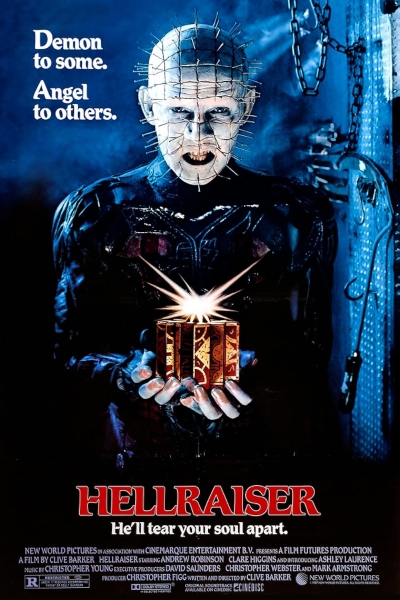
When she and her husband move into a house previously owned by the husband’s brother Frank, Julia can’t help but fantasize about the sexual encounters she had with Frank many years ago. This mid-life crisis leads to murder, as Frank returns from the dead and demands blood in order to be restored to his fully human form. Meanwhile, her stepdaughter Kirsty encounters the strange angel-demons Frank has escaped from and is in a race against time to trap Frank before her own soul is forfeit.

Hellraiser is obviously a classic and it’s always the classics that are the most difficult to talk about. I can only say “this and that are good” so many times. I think the thing that struck me this time around is how well it pulls off the protagonist shift: from being centered around Julia to being centered around Kirsty. This is a switch we see a lot in horror, especially slasher films. We start the film essentially from the killer’s perspective and it’s only in the last act that we switch to the perspective of the final girl. Hellraiser does this so much better than most, fully immersing us in Julia’s inner life before slowly shifting to Kirsty’s point-of-view and by introducing us to the Cenobites with Kirsty, we are aligned with her for the rest of the movie.

I think part of what works about Hellraiser, when comparing it to the rest of the franchise, is that without the presence of the Cenobites, it’d still be an effective horror film. It wouldn’t be iconic, but it’d be effective. When it comes to the many non-Cenobite centered entries in this franchise, they weren’t particularly good movies before the Cenobites were added in. At the end of the day, Hellraiser is not only good, not only an artistic achievement, but actually iconic in the traditional sense of the word. It captures a mood, an atmosphere, a philosophy so rarified that it was never captured again, just evolved upon in the best instances and bastardized in the worst.

#2 – Hellbound: Hellraiser II (1988)

Kirsty’s presence in a mental hospital gives Dr. Channard the perfect opportunity to open the gates of hell, with a resurrected Julia’s aid. Kirsty and her puzzle-solving mute friend wander through the labyrinth of hell to try and find her father, but the Cenobites are closing in and there’s no bargaining out of their wrath this time.

This movie is bug-nuts banana-cakes insane and I love it. It takes every concept and every theme from the original and dials it up to eleven, for better and for worse. Gone is the moody atmosphere and claustrophobia, as there’s frankly not enough time for it. While Hellraiser is confined and its smallness is its greatest strength, Hellbound is labyrinthian in all the story beats, imagery, and themes it’s trying to hit. You have to be a fan of the original and already invested in Kirsty as a character, as Hellbound makes no concerted effort to get its audience on board. The roller coaster simply goes too fast for that. 

Hellbound is in many ways an ideal sequel. It’s intentional, but playful in its relationship with the original. It doesn’t try to recreate the magic, but instead creates its own similar magic. It carries over enough of the aesthetics of the original that even new concepts like a labyrinthian hell feel as part of the universe as the returning elements. While Hellbound lacks the artistic touch of the original, I think it more than makes up for that in raw creativity and thrills galore.

#3/#4 – Hellraiser III: Hell on Earth (1992)/Hellraiser (2022)

A choose-your-own-adventure entry where which movie works best depends on what you like about the original duology. If what you like is the horror movie melodrama, the creativity of the gore, and the technical achievements of the effects, then Hell on Earth is more your speed. However, if what you prefer is the atmosphere, the surrealism, and the general philosophy of the Cenobites, then Hellraiser (2022) is for you.

A reporter with daddy issues finds out from Pinhead’s human soul that his evil counterpart is about to break his way into our world and she’s the only one who can send him back to hell. 

Hell on Earth is cheesy. Like really cheesy. But that’s what makes it fun. If it wasn’t a cheesy melodrama thinly veiling a special effects bonanza, it wouldn’t be as high on this list. Even Pinhead’s having more fun, basically acting like Freddy Krueger took over his body. Its major flaw is that it’s not the atmospheric and philosophical horror that made Hellrasier unique in the first place, but then again it wasn’t really trying to be that.

An addict with a shitty boyfriend ends up with a mysterious puzzle box that disappears the people who solve it. As reality unwinds around her, our heroine fears she’s responsible and desperately tries to undo the damage done by the box. 

My main qualm with Hellraiser (2022) is that it works really hard to reformat the original ideas into a script that follows a slasher format, but I don’t think that slasher format actually works that well. So much of what doesn’t work around the movie stems from that central issue, from inconsistent characterization to odd pacing. On the positive side, the visuals are solid, the Cenobites really benefit from being portrayed more stoic and otherworldly, and the lead delivers a really solid performance. Ultimately it’s still a good time, but it never reaches the heights of the original duology.

#5 – Hellraiser: Bloodline (1996)
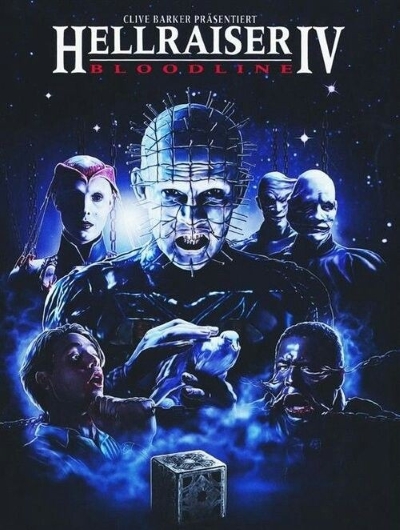
A three part story of three generations of the L’Marchand family. In part one, innocent toymaker L’Marchand becomes an unwitting player in the grotesque and arcane circumstances that made the box the cursed object it is. In part two, L’Marchand is an architect trying to save his family from Pinhead, even if that means opening the door to hell. And in part three, the futuristic descendent of the L’Marchands has set a trap for Pinhead, but is stopped from completing it by unsuspecting space cops.

Bloodline is not nearly the technical marvel that its predecessor Hell on Earth is, but it has its fair share of cheesy special effects to delight. Instead, it’s the story that’s ambitious. A tale of three generations’ relationships with the puzzle box and Pinhead, I personally found each of the three stories compelling. Part two feels tonally like a direct sequel to Hell on Earth and is the weakest for it. Disowned by its director, the directing and acting are indeed subpar, but there’s enough creative juice flowing through this one to get it its place on this list.

#6 – Hellraiser: Deader (2005)

A hard-nosed and street-smart reporter is assigned to investigate a cult that intentionally kills its members so that they can be brought back to life. As she investigates, she falls into the cult’s trap and ends up playing a role in their rituals that she never could have predicted.

All of the Rick Bota entries (Inferno, Hellseeker, and Deader) have these mind-bending story and film techniques that ultimately don’t do a whole lot for the movie. Deader’s mind-bending tricks are the most successful, probably because the story itself is a bit more complex and surreal. With a L’Marchand descendent at the head of the cult, the movie ties into the mythology in an ambiguous but more present way than many of the other entries on this list. The lead performance, played by Kari Wuhrer, is solid enough that she’s my favorite lead character after Kirsty. There’s a lot to like and a lot to be disappointed in with Deader, but the scales ultimately tip towards the positive, making it the last film on this list I’d actually recommend watching.

#7 – Hellraiser: Judgement (2018)

In an abandoned house, a strange man with a strange typewriter judges the souls of those unfortunate enough to enter his domain, with gross punishments awaiting those who are deemed guilty. Outside the house, a serial killer is killing in the name of God and the three cops assigned to catch him struggle to understand him, let alone his connection with other disappeared criminals.

Technically I rated this the same as Hellseeker, but I’m placing it higher because it has one thing working for it: High Strangeness. Truly surrealist imagery that evokes some amount of horror while also being so baffling that it defies logical understanding. Unfortunately these few scenes of High Strangeness are absolutely bogged down by a standard procedural cop movie, complete with the alcoholic jagged veteran, the loyal-to-a-fault partner, and the up-and-coming female rookie. Its twists and turns ultimately feel hollow as the movie desperately tries and ultimately fails to say anything with its wordy dialogue and vague literary references. 

#8 – Hellraiser: Hellseeker (2002)

You and your wife get in a car crash. As your car sinks to the bottom of the river, you watch your wife drown inside the car. When you wake up in the hospital, a month has passed and your wife’s body has never been found. Where has your wife gone and why won’t the world go back to normal?

Kirsty’s story gets a sad and forgettable ending as we follow not her, but her shithead husband through his attempts to make sense of her disappearance and all the strange things happening to him. It pulls many of the same tricks as Inferno, to about as effective a result as a wet fart. The lead actor is definitely better than Inferno’s, but he’s given so little to work with that you can’t even be bothered to hate him. What a snooze.

#9 – Hellraiser: Inferno (2000)

A cop sticks his nose a little too far into a ritual murder case and uncovers a conspiracy that threatens his life and everyone he loves. As he rushes to catch the mysterious “Engineer” behind everything, he realizes that nothing and nobody is as they seem.

Clearly not intended to be a Hellraiser movie, just like most of the other direct-to-video entries, the main bad guy of this film isn’t Pinhead, but actually a faceless entity called “The Engineer.” Mind-bending tomfoolery follow to very little effect, taking up lots of screen time and leaving no real impact on the audience. The lead actor is basically dollar store David Boreanez and his two emotional notes are “angry” and “brooding.” It’s hard to much care about a protagonist when the movie makes every effort to make us actively hate him.

#10 – Hellraiser: Hellworld (2005)

Two years ago, their friend died by suicide when he became obsessed with the online game “Hellworld,” based on the Hellraiser franchise. Now, invited to a real-life “Hellworld” party, the friends re-immerse themselves in the game they once loved, this time with even more horrifying results.

What if Hellraiser was a haunted house slasher film that was the epitome of 1999, complete with wannabe Scream writing, even though it was released in 2005? Well you’d get this poorly written mess, that constantly ruins what little tension it creates by having the characters make meta-commentary jokes. Lance Henriksen, the die-hard Hellworld fan who hosts the party, is easily the best part of the movie, but that’s not saying much as even he can’t seem to take the script seriously. Out of all the candidates on this list, Hellworld is probably the best watch for a “Bad horror movie” night with friends but watching it with any amount of earnestness will leave you as cold as the graves these kids get buried in.

#11 – Hellraiser: Revelations (2011)

While on a trip to Mexico, two young men disappear after opening a strange puzzle box. Years later, their families come together for an innocent gathering, only for one of the boys to re-appear. But why is he acting so strange? And what does the puzzle box have to do with it?

If you thought the other direct-to-video sequels weren’t enough like the original Hellraiser duology, well congrats on your monkey’s paw wish being granted. Revelations is truly, actually, and sincerely, barely a movie. It’s not its low budget that’s the problem, but the constant technical and creative incompetence that holds this film back. Now I’m not wedded to Doug Bradley being Pinhead (I actually quite liked the remake’s Pinhead), but the actor they chose for this one ain’t it chief. It’s a thin story stretched as far as it can go, with its twist obvious to anyone who’s seen Hellraiser (and who would watch this without being a Hellraiser fan?).

Come at Me!: Kung Fu 101 Panel (Anime Midwest 2018)

Alright, here’s a list of every title I talked about and showed (sort of)! You can also check in with my letterboxd, where I’ve documented my thoughts on a lot of these films. A while ago I made a spreadsheet listing which kung fu movies are mentioned most frequently in top # articles that might be helpful in narrowing down what to watch first! An asterisk (*) marks clips actually shown!

Come Drink With Me
One-Armed Swordsman
Bruce Lee Filmography
Drunken Master
The Prodigal Son

Dirty Ho*
5 Deadly Venoms
Crippled Avengers
The 36th Chamber of Shaolin
Return to the 36th Chamber of Shaolin
Master of the Flying Guillotine
A Touch of Zen
Kid with the Golden Arm

Funimation’s Hong Kong Connection
Bastard Swordsman*

John Woo Filmography (1986-1992)

Zu: Warrior from the Magic Mountain
Mr. Vampire
Encounters of the Spooky Kind
The Bride with White Hair
Journey to the West: Conquering the Demons*

Jackie Chan Filmography (1985-1995)
Miracles (The Canton Godfather)*

Project A
Wheels on Meals
The Eight Diagram Pole Fighter
Five Elements Ninjas
My Young Auntie
The Master
Martial Club
Legendary Weapons of China

Jet Li Filmography (1991-1998)
Once Upon a Time in China II*

Heroic Trio
Iron Monkey
Riki-Oh: The Story of Ricky
Wing Chun

The God of Cookery
Shaolin Soccer
Kung Fu Hustle

Crouching Tiger, Hidden Dragon
Hero
House of Flying Daggers
Ong-Bak
The Protector
Chocolate
Red Cliff
Ip Man

The Grandmaster
Shaolin
The Raid: Redemption
Dragon
Tai Chi Zero
The Final Master
Kung Fu Killer
The Butcher, The Chef, & The Swordsman

Me, Relationships, & Gone Girl

When you’re in a serious relationship, questions about the future are ultimately raised, particularly relating to marriage. Can you stand to live with each other? Are you satisfied with just him/her? Are you just plain compatible? How about for life? Even if your answer is yes to every one of these questions it’s still a massive gamble, and one you have to make together. But just when you think you’ve overcome doubt, become totally comfortable with the idea, that nagging voice in the back of your head asks “what if…?”

While most of Hollywood insists on restoring, maintaining, and, of course, creating your faith in romance and “true love,” Gone Girl actively destroys it. That little voice is given a megaphone.


At its core, marriage is the bringing together of two people, but it’s also the culmination of a hopefully long and somewhat arduous journey. This eternal bond is certainly romantic, but people change. Constantly, in fact.The person you started won’t be the same person after five years. The question is if you can still love that person. Everyone has this vision of who they’re dating, based off of, of course, your experience of them. Every single moment with them compounds into your idea of them, your understanding of who they are. This is somewhat futile though, as can you ever really know somebody? You’ll never know if the person he/she is around you is actually who they are, or if the version of you that exists is only there because you want to meet their expectations.

These are the questions, the anxieties, at the heart of Gone Girl. They’re valid concerns too, questions that people don’t think to ask themselves between cute dates and netflix nights.

Films often show the beginning of a relationship, the fight to be with the person you love, or want to love. It isn’t nearly as simple as this, as the battle to stay with the person you love, or to stay in love with a person, is just as hard. These portrayals are out there in the media, but they aren’t popular with people my age and younger. We don’t want to know how hard love is, and frankly we don’t have to care. If your relationship fails in high school, you still have decades to get it right. As you get older you put more stock in actually maintaining a relationship, in being an adult about it if you will.

gone-girl-main
Due to reasons beyond romance, I’ve never really felt like a member of my generation or age group, but I still hardly consider myself an adult. The developments in my life that reflect adulthood are still foreign to me, like some dream I’m going to wake up from. Though I know, deep inside, that the future is marching towards me. The future where all of this is normal. Gone Girl is a crucial movie in that way. It’s the first film where I identified with the characters not just on a human level, but as fellow adults. As people who have to deal with the same issues I will deal with, or already have. This was a weird revelation, and one that gave the anxieties brought up by this film extra punch. That marching future just picked up its pace, but that’s okay.

Gone Girl is an extremely great movie that asks harsh questions about relationships. Questions I’m finally ready to ask, and just beginning to be able to answer.

Superman (1978) Essay

christopher-reeve-and-margot-kidder-as-superman-and-lois-lane-in-superman-1978
Cinema de Super Part 1b; Read the review here

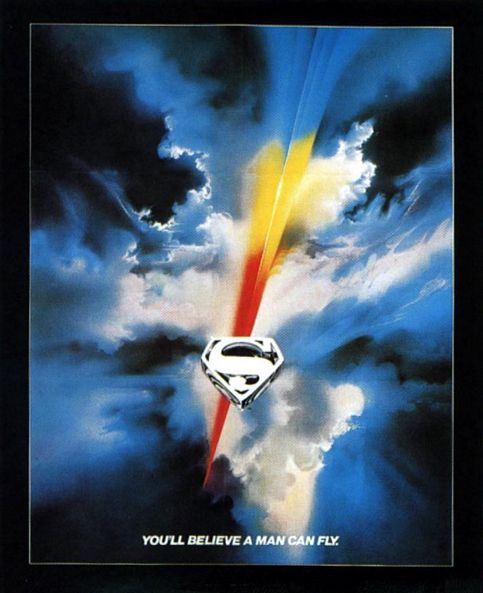
Our journey through cinematic super-hero-dom begins appropriately with Superman (1978). Superman the character kicked off super-hero comics and the success of Superman the movie proved that comic book films could be a viable investment, although this wasn’t acted on until a decade after the fact. Being so far removed from our other entries means that it’s distinct, but still familiar. It’s a relic of a different era, one where red curtains unfolded both in front of the screen and in it. The tradition of Cecil B. Demille stepping out to set the stage is in this case replaced with a kid reading an issue of Action Comics. Superman had the unique task of elevating comic books to a serious and convincing cinematic level – for the first time. Batman (1989) and its followers didn’t have to do this. This task rests solely on the shoulders of Superman and, by extension, director Richard Donner. The film itself isn’t just a relic, but Donner makes it about them as well. The advertising campaign for Superman boasted that “You will believe a man can fly,” and indeed Donner tries his hardest to convince you of this. He contrasts the wholesome 1940s character against the far more chaotic 1970s. He doesn’t force these two worlds into a confrontation, but rather merely acknowledges the campiness of the hero in order to make you accept him as “reality.” Seeing Superman wave to an afro-touting disco dude and stop down-to-earth crime like tube-sock-wearing bank robbers and a high-rise-scaling cat burglar is entertaining, sure, but what really sells the film as something more than just “the funny pages” is the man in the bright red, blue, and yellow suit himself: Christopher Reeve.

I grew up with the Reeve Superman movies. I used to run around in a Superman cape at my Grandma’s house, with Superman IV: Quest for Peace playing in the background for the 700th time. When the Hollywood Video down the street from us closed, the sole thing I bought from their soon-to-be-discarded stock was an old VHS of Superman. While Tim Daly is iconic and Brandon Routh looks the part, Christopher Reeve is my Superman. His grin as he swoops through the air to the sounds of John Williams score is Superman to me. That’s the character in a nutshell.

Superman-Smile

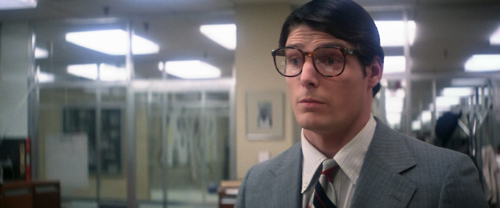
What Reeve brings to the role, and what makes it work, is ultimately the same aspects that make the film itself work. There’s this undeniable charm and instinctual genuinity that emanates from him at all times. Chuckles are elicited as he bumbles through the Daily Planet’s office, but we can see the layers of Kent’s facade. He may be over-playing the nice guy, but he genuinely wants to be one as well, which makes the constant pushback against him all the more heartbreaking. When he dons his cape a lot of the personality and humanity of Clark Kent is lost, but with a smile Reeve makes you understand that Superman isn’t supposed to be human, he’s an icon.

The film reflects these qualities as well, with Donner pouring charisma and honesty into each part of the film. Donner knows it’s campy material, but instead of playing up that camp like the 60s Batman series, he presents it to you straight, merely asking you to play along. The film deserves this investment, and Donner tries his hardest to reward you. The beginning section on Krypton could have been played off as cheesy sci-fi, thrown in for five minutes before moving on to “the good stuff.” However, Donner holds you in this world, subtly implying its politics, technology, and society. It’s taken seriously, and this validity is also given to the very situation that Jor-El and Lara are in: sending their son to another world to avoid his death. The two bounce points off each other: Jor-El insisting that at least he will survive, Lara lamenting his inevitable loneliness. This somber moment is powerful and gives their death, along with the planet’s destruction, the weight it deserves.

superman-the-movie-1978-kal-el-laboratory-krypton

It’s easy for writers to get carried away with how alien Superman is, but at the core of his origin is an anchor of humanity: his childhood in Smallville. The rather light-hearted and seemingly pointless scenes of Clark’s daily life weigh heavily on the rest of the film for they are our reminder that Clark Kent is Superman, not the other way around. The alien world of endless ice and snow is a far cry from Kansas, but the endless fields of crops serve the same purpose. It isolates Clark, protects him, and makes his relationships with his family and friends all the more important. These relationships are tested and ultimately shattered when Jonathan Kent dies, but not before passing on some wisdom that alludes to just how great a father he was. In grief we transition from the isolation of Smallville to the literal isolation of the Fortress of Solitude. Here Clark goes through that essential transition to adulthood, with both Jonathan and Jor-El as his guiding voices.

superman1

This isolation is broken, and not quietly, as we finally swoop into Metropolis, bombarded by the crowds of people, the honking cars, and the fast pace of not just the city, but the people therein. We’re re-introduced to Clark as well as the rest of the iconic cast and for me this ten minutes is a rare treat to watch or, more precisely, listen to. Donner steps back and lets the actors and the script take over, as the clear and concise writing gets across to us who the characters are and what they’re like with all the ease of a comic, but without the cheesy over-explanatory dialogue. It’s the kind of character writing that deals in archetypes, not cliches or stereotypes. A rare thing indeed.

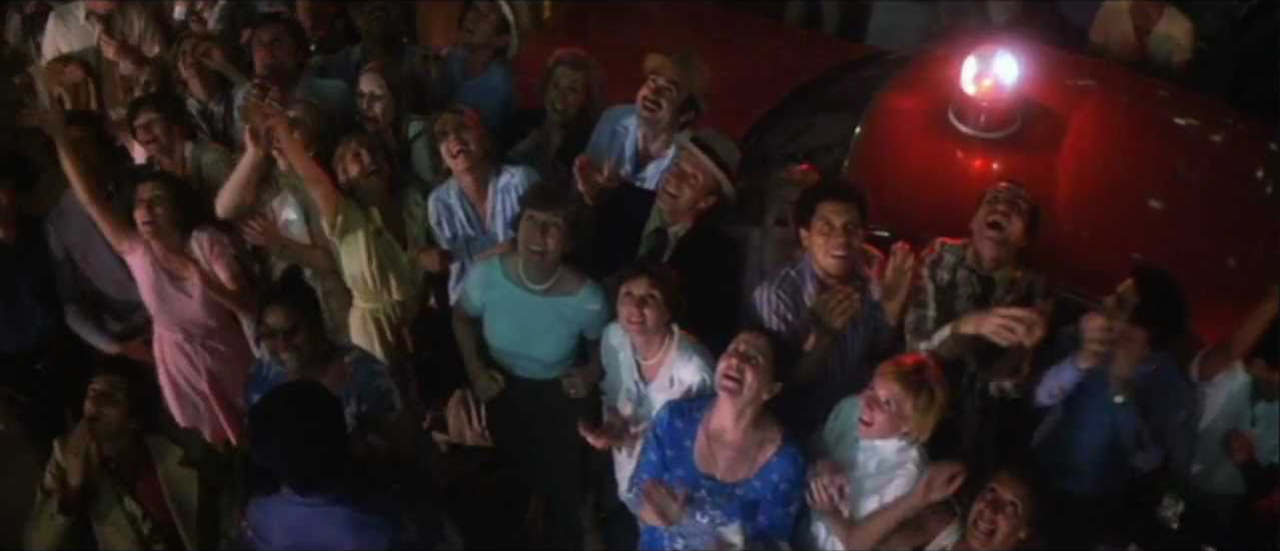
An hour in, the slow burn is rewarded, for the introduction of Superman is careful, intentional, and marvelous. For Superman, the things he does during this debut night aren’t particularly spectacular when you consider the source material. So Donner focuses on the everyday people instead, emphasizing their wonder and amazement. These scenes breach into corniness occasionally, but the disbelief and stunned attitude these characters have reflects how most of us would react, albeit nowadays with a phone in our hands.

maxresdefault

The film must have an actual conflict though, and thus Lex Luthor kicks his real estate scam into action. It’s in the interactions of him and his two goons that we feel the oppressions of campiness. Gene Hackman does a brilliant Luthor, yes, but he’s weighed down by the scripts emphasis on him berating the mistakes of the buffoon Otis. Going back to Donner’s compromises, this is the big one. These were not the days where people would just accept mutants fighting each other or a man in an iron suit fighting aliens, after all Star Wars had come out just a year earlier. So Donner makes Superman comedic, and more obviously so than the witty dialogue that persists through the rest of the film. This does succeed at making the film more accessible, especially for kids, but it leaves the last act lacking the weight the rest of the film has.

In fact the whole climax lacks punch until Lois Lane’s car gets trapped in an avalanche. Superman finds her dead and Reeve’s performance during this scene is interesting. This is an important lesson for Clark to learn- that he can’t save everyone, even those he loves. His rage at himself and at the world comes across clearly and legitimately, but his scream of anger does seem over the top.

superman-1978-16

The ending is infamously the largest logical fallacy in the plot that Superman has. It’s, of course, impossible to turn back time by changing the earth’s rotation. Regardless of the visual representation, Superman has gone back through time in the comics and considering this film came out just 10 short years after his adventures with Streaky the Super-Cat, I’d say it could be a lot worse. In fact this ending is thematically interesting. Superman is in mid-flight when the voices of his fathers pop into his head, Jor-El repeating over and over that it is forbidden and Pa Kent affirming that Clark is here for a greater purpose. Clark pushes on, turns back time, and saves Lois. This is a selfish act, the only one. The one moment where Clark uses his powers for himself, not for others. This isn’t simply courting Lois Lane, this is actually changing the world. Because he can. And he wants to. Just this once. It’s one final confirmation that Superman may be from another planet, but he is human. He can be blinded by love. He can disobey his parents. Just like the rest of us.

ae9a1121a1a06381-dc_comics_superman_christopher_reeve_desktop_1024x768_wallpaper1073650For me, 45 years removed, Superman is still one of the best super-hero movies ever made. Perhaps it’s the fact that standards hadn’t been “set” for adapting this material, allowing for the kind of experimentation that proliferated the 1970s and created several great films like this one. Donner takes the source material seriously and presents it earnestly. He seeks not to overwhelm you with spectacle, but to convince you to believe in what small spectacle there is and, paramountly, believe in its hero. Any six year old can walk out of a super-hero film in love with said hero, but it takes a real special film to do the same for adults. Perhaps it’s because Donner and Reeve don’t emphasize that Superman is a hero, rather they let you fill in the blanks as he earns that title. Perhaps it’s because of the love of the audience that emits not just from Donner’s film, but from Reeve’s Superman. Whatever the reason, you can be sure that while Superman may say goodbye with a salute and a wink, he’ll be back whenever we need him most.

Superman (1978) Review

superman-version1-1978-movie-poster

Cinema de Super Part 1

In the wash of super-hero epics in theaters these days, it’s hard to look at Superman (1978) as anything but a relic. It’s slower and cheaper sure, but the very way it tackles the subject matter is old-fashioned as Superman had the unique task of elevating comic books to a serious (and profitable) cinematic level – for the first time. The advertising campaign for Superman boasted that “You will believe a man can fly,” and indeed director Richard Donner tries his hardest to convince you of this. He contrasts the wholesome 1940s character against the far more chaotic 1970s. He doesn’t force these two worlds into a confrontation, but rather merely acknowledges the camp of the hero in order to make you accept him as “reality.” Seeing Superman wave to an afro-touting disco dude and stop semi-normal criminals like tube-sock-wearing bank robbers is entertaining, sure, but what really sells the premise as something more than just “the funny pages” is the man in the bright red, blue and yellow suit himself: Christopher Reeve.

superman00-1332109735

What Christopher Reeve brings to the role, and what makes it work, is ultimately the same aspects that make the film itself work. There’s this undeniable charm and instinctual genuinity that emanates from him at all times. Chuckles are elicited as he bumbles through the Daily Planet’s office, but we can see the layers of Kent’s facade. He may be over-playing the nice guy, but he genuinely wants to be one as well, which makes the constant pushback against him all the more heartbreaking. When he dons his cape a lot of the personality and humanity of Clark Kent is lost, but with a smile Reeve makes you understand that Superman isn’t supposed to be human, he’s an icon.

The film reflects these qualities as well, with Donner pouring charisma and honesty into each part of the film. He knows it’s campy material, but instead of playing up that camp like the 60s Batman series, Donner presents it to you straight, merely asking you to play along. The film deserves this investment, and he tries his hardest to reward you. This is probably best exhibited during the Krypton scenes, which could have been played off as cheesy sci-fi, thrown in for five minutes before moving on to “the good stuff.” However, Donner holds you in this world, subtly implying its politics, technology, and society. It’s taken seriously and this validity is also given to the very situation that Jor-El and Lara are in: sending their son to another world to avoid his death. The two bounce points off each other – Jor-El insisting that at least he will survive, Lara lamenting his inevitable loneliness. This somber moment is powerful and gives their death, along with the planet’s destruction, the weight it deserves.

superman-the-movie-1978-kal-el-laboratory-krypton

A fundamental component of what makes Superman work is its wit, which fully develops once we get to Metropolis. We’re (re)introduced to Clark as well as the rest of the iconic cast and they promptly begin to bounce off of each other with speed and, more importantly, ease. It’s that kind of subtle comedy that’s often a byproduct of actually writing archetypes, not cliches and stereotypes. This clever dialogue extends to Superman’s debut night and the amusing interactions between him and the dumbstruck public are entertaining enough that they could have made up the rest of the film, no problem.

ae9a1121a1a06381-dc_comics_superman_christopher_reeve_desktop_1024x768_wallpaper1073650There must be actual conflict though, and thus Lex Luthor kicks his real estate scam into action. It’s in the interactions of him and his two goons that we feel the oppression of camp. Gene Hackman does a brilliant Luthor, yes, but he’s weighed down by the scripts emphasis on him berating the moronic Otis. This is an unfortunate compromise on Donner’s part. These were not the days where people would just accept mutants fighting each other or a man in an iron suit fighting aliens, after all Star Wars had come out just a year earlier. So Donner had to make Superman comedic and more obviously so then the aforementioned witty dialogue. While this does succeed at making the film more accessible, especially for kids, it leaves the last act lacking the weight the rest of the film has.

Relic or not, Superman is stands tall as one of the best super-hero movies ever made, even 45 years later. Perhaps it’s because Donner takes the source material seriously (in spite of its flaws) and presents it earnestly. He seeks not to overwhelm you with spectacle, but to convince you to believe in what small spectacle there is and, paramountly, believe in its hero. Any six year old can walk out of a super-hero film in love with said hero, but it takes a real special film to do the same for adults. Thanks to the well-crafted film backing him, Christopher Reeve’s Superman is forever embedded in generations of fans, both young and old, as their Superman.

Cinema de Super: An Introduction

invincible-alex-ross-8

I grew up with super-heroes. I had Batman pajamas, I played with my Spider-man action figure constantly, and I mourned the day I had to throw out my Superman shorts. It was inevitable that I’d end up reading comic books, but only my parents could have predicted that they’d be all I’d read for the next four years. My reading rate slowed in high school, but that’s only because my focus shifted to film. To take a cue from Tezuka, if cinema is my wife than comic books are my mistress. When the Marvel movies started to come out, I was the first amongst my friends (or possibly anyone) to tout that they’d be the biggest thing ever. I waited four long years for The Avengers to come out and after it did… well that’s a story for later. Regardless, in the past couple years I’ve found my enthusiasm for the big screen versions of my favorite characters waning.

My interest in these films has continued to an academic one (see my previous essay) and I’m not alone. In fact I’d say the attention paid and weight given to these films academically is… far greater than the evidence given. That being said, super-hero films are, in many ways, quite fascinating.


It’s been claimed that super-hero films are a genre and, while I wouldn’t go that far, they certainly qualify as at least a sub-genre. Yes, they have their own sets of tropes, character archetypes, and story arcs, but the stories themselves aren’t nearly as iconic and flexible like horror, mystery, or romance. Their origins are muddy and complex, much like another famous genre: the western. While the western is more reliant on location, it still has a set of themes, stories, and characters that it frequently deals with. That being said, you can still categorize most western stories in genres like adventure, drama, or romance. Similarly, most super-hero films obviously fit into sci-fi or fantasy, but also adventure, drama, comedy, or romance. Despite all this, to call super-hero films a “genre” feels a little off for me. Why is that?

Like a lot of other genres, super-hero films are adaptations more often than not. However, unlike the aforementioned Western, super-hero films are by definition adaptations. Super-hero films are specifically and intentionally based off the comics from which the genre itself arose. It’s been noted that genres go through cycles, and if you look at even something as small as horror, which constantly goes through cycles of adapting formulas and then rejecting them, you can see this. However, super-hero films constantly buck these rules, with films that would be considered post-modern takes on older stories coming out before more classical films. This is because in its original medium, comic books, “super-hero” is an actual genre, not sub-genre, that has already gone through its cycles. Batman’s gone from goofy (50s and 60s), to slightly darker (70s and 80s), to incredibly dark (Late 80s and 90s), to lighter but more complex (Late 90s and 00s), to darker and simpler (10s). If you looked at the movies you’d see that Batman started campy (‘66), swung far darker (‘89 & ‘Returns’), got progressively lighter (‘Forever’ & ‘and Robin’), then straight back to a far more realistic cynicism (Nolan trilogy). With far less creative entries, this progression makes proportionally less sense. The cycles are there somewhat, but they’re more financially than creatively driven.

It’s hard to call the super-hero genre evolving when the stories that are considered deconstructive caps on the genre, like Watchmen and Kick-Ass, come out before genre keystones like The Avengers. Without an ample material to derive examples from, a long enough time span (the actual beginning of the sub-genre in earnest is sometime between 25-15 years ago), or clearly present cycles, it’s hard for me to classify super-hero films as anything but a sub-genre. Perhaps if they survive the upcoming bubble burst, but if not they will remain a soon forgotten trend like 70s disaster movies. Without the typical story-based cycles present to steer the future of super-hero films, we really have no clue as to what its future is at all. Perhaps by looking through the history of this awkward and fledgling sub-genre we can find some patterns that will give us a vision of the future.

That being said, this is the very long introduction to one such retrospective. Over the course of god knows how long, I’ll be watching every notable theatrically released super-hero film, from 1978 to the present. In total I’ll be covering about 70 films, the names of won’t be revealed until the review itself comes out. We’ll see if I can make it. Each film will get an approximately 800 word review that’s formally written, but if the film strikes me a certain way it’ll will warrant an additional longer, and more personal, essay. I’ve seen most of these films before, but not for a long time, so this will be as much a trip through film as it is through my childhood. I hope you’ll join me on what will hopefully be an interesting journey.

“Japanese Horror: Film vs Anime” Notes

My computer has crashed so apologies if I forget any titles. The ones with asterisks actually had a clip shown:
Gojira*
Onibaba
House*
Entrails of a Virgin
Evil Dead Trap*
Guinea Pig 4: Mermaid in a Manhole*
Tetsuo the Iron Man*
Ring*
Ju-On: The Grudge*
The Grudge*
Dark Water
Pulse
One Missed Call
Audition
Ichi the Killer
Suicide Club*
Tokyo Gore Police*
Devilman*
Legend of the Overfiend*
Mr. Arashi’s Amazing Freakshow*
Perfect Blue
Wicked City
Demon City Shinjuku
Vampire Hunter D: Bloodlust
Pet Shop of Horrors
Higurasji: When They Cry
Hellsing: Ultimate
Gyo: Tokyo Fish Attack!
Ghost Hunt
Highschool of the Dead

Don’t forget to tell Anime Midwest how much you liked this panel by filling out their feedback form!
Questions, comments, or concerns? Email me at jwiderski@gmail.com
Don’t forget to like Mental Multiverse on facebook!
If you’d like me to appear at your favorite convention, let them know by linking them to my site!

Fear Itself: The Next Generation of Horror

10845718_1602800673326015_3819358720665108337_o

Fear Itself is the feature length debut of Aaron Mirtes, budding independent director. Based off his award-winning horror short “The Clown Statue,” the film’s kickstarter page cites the plot as:

“Emma, a college student with a crippling fear of clowns, must come face to face with her worst fear when a clown that has been terrorizing the town promises to kill her. This clown gives a balloon to each his victims with the exact time and date he’s going to kill them written on it. After receiving one herself, Emma realizes that she has two days left to live, and must fight against the clock to find a way to survive.”

With a trailer already up on the page, one’s sure to ask why they need money at all? As with many productions, anything can go wrong. A large fire forced one of their locations to be unaccessible, which means everyone had to pack up and go home. In order to go back and finish the remaining 10% and add in new scenes, the Fear Itself crew needs your help.

So why, of all indy films asking for money, am I spotlighting this film? Why, of all indy films, should you fund this one? Besides the fact I think we need more killer clown movies, Aaron is an acquaintance of mine. At school together, he demonstrated a certain vision and intelligence when it came to filmmaking I’ve yet to see in someone I’ve worked with since. Listening to the interview I did with him for Cinema Cynique, you can pick up on this as well. With The Babadook and It Follows ushering in a new era of putting the art back in horror, it’s not hard to see Aaron Mirtes and Fear Itself fitting comfortably into the new generation of horror films and filmmakers.

I’ve gone on record several times condemning the horror genre and its filmmakers for recycling and regurgitating the same stories, tropes, and characters. To me, it’s a no brainer to support an original and fresh project. To invest in Fear Itself is not just to invest in the film, but in the future career of Mirtes and all the interesting and entertaining films he is sure to bring us.

Check out Fear Itself‘s Twitter, facebook, instagram, and Kickstarter

Assembly Line Heroics: The Death of Morality in the Superhero Film

superhero-2013
This is an incomplete essay I wrote for class. The last paragraph was written for this posting, but the rest is intact. Also before we get into the article, check out my new facebook page where I’ll be posting all my reviews, sharing related articles, and asking questions that will be incorporated into new editorials!

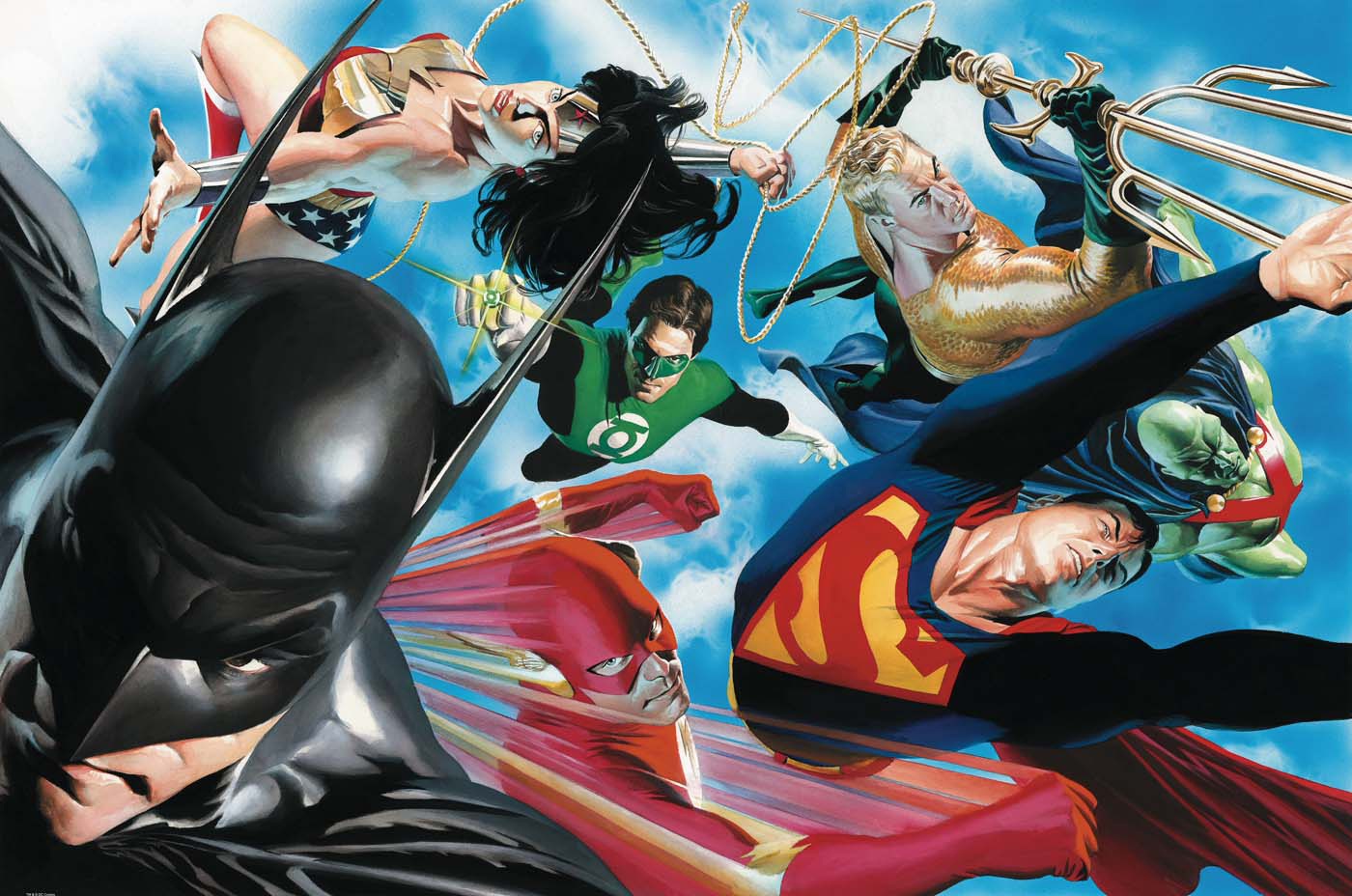
The iconography of the superhero is important to our culture, modern myths that exist in the back of our subconscious as relics of childhood. They’re fundamental in the creation of morals in children as well as exposing them to reading and literature. Born on the cusp of World War II, superheroes and their stories has evolved from simple parables of good and evil to complex or convoluted universes and epics tying together every theme and gimmick within science fiction and fantasy. Due to each character being handled by dozens to hundreds of creators, their mythos isn’t clear cut, but within the ambiguity can remain a core, a “gist” that each child picks up instinctively. Superman is the warm protective boy scout, Batman is the dark avenger of crime (and occasionally protector of the weak), Captain America is the stranger in a strange land, here to remind us of our past, and Spider-man is the journey to and through adulthood twisted by tragedy. To take these heroes, ultimately the sums of the decades of parts, and accurately translate them to screen is truly no easy task. Comics demand participation, forcing you to fill in not only the gaps in continuity, but gaps in action due to the format of serialized pictorial storytelling (McCloud). Cinema fills in the gaps for you and asks a lot less of you in terms of participation, but asks more of you in terms of suspending disbelief since cinema is a far more “realistic” medium than comics.

This paradox of realism and faithfulness to the source material has plagued comic book films since the beginning. In the 20th century films took a variety of approaches, from the incredibly faithful 1978 Superman, to the intentionally distant 1989 Batman. In the early 2000s starting with X-Men there was an attempt to be fairly faithful to the comics, if not in content then in tone. Starting with Christopher Nolan’s Batman Begins and brought to the forefront with Iron Man, superhero films started feeling less like their comic counterparts. Iron Man and The Dark Knight made 2008 the turning point in superhero films. Iron Man’s gross of over $300 million would set in motion the rest of the Marvel films to come, and The Dark Knight’s box office and critical success would bring superhero films to the forefront.

the-dark-knight-original

Now the fact that these two specific films mark the turning point is an important fact. The Dark Knight is perhaps the least “comic booky” comic book film ever made, passing over the melodrama for a battle of ideologies, and avoiding super-weapons for regular acts of domestic terrorism. Iron Man is far more standard in its story, but thanks partially to its star, Robert Downey Jr., and its director, Jon Favreau, Iron Man feels drastically different from its comic book counterpart. The Iron Man comics were occasionally jokey, yes, but for the most part they were standard comic book fare and took itself seriously in the process. Iron Man is a light and fun film, with its Tony Stark being a wisecracking smartass who makes the film with his charismatic performance. The setting is updated so that Stark is captured in the Middle East and his enemy is a terrorist group. He spends most of the movie developing the suit and he finds himself clashing with the military on his first outing. The film remains fairly down to earth in this way, until the final act where Obadiah Stane puts on his super-suit and dukes it out with Iron Man. Just when it seems like the film will end on a standard note, Tony Stark reveals he’s Iron Man, breaking away from the longstanding secret identity he had in the comics. None of the Avengers have secret identities in fact, which is highly unusual considering how much of a cornerstone of the genre it is. Iron Man felt different from the previous comic book films, mostly because it was severely lacking in cheesiness, and more importantly it had a distinct style and tone to it that was different to its source material, much like Nolan’s Batman films did. It did all this without pissing off the fans and appealing to the mainstream audience.

With those origins established, let’s look back at the films that helped shape the current superhero film. First up is Thor, a daring venture brought to life by Shakespeare-enthusiast Kenneth Branagh. The film by all means shouldn’t exist, after all Thor has always been a character steeped in so much high fantasy and mythology that translation to the screen seems impossible, let alone in a majorly Christian country. Branagh and the slew of writers managed to take a few core themes: family, humility, love, and make the film about that over the hierarchy of Asgard or the religious details of how Yggdrasil works. The film grossed $181 million domestically and proved that concept has little bearing on success.

avengers

Cut to The Avengers, the culmination of Marvel’s efforts to that point and the pay-off for the “gamble” that they and Disney made. It’s highly unlikely that audiences wouldn’t have went to an Avengers movie with the four years of anticipation they had, but it was still daring nonetheless. The skillful directing and writing of Joss Whedon, whose previous work on Buffy the Vampire Slayer and Firefly made him a suitable choice to handle the team dynamic, made the film above par in character writing and dialogue even if the story was a little lacking. Avengers carried the same balance of humor and action that the Iron Man series had and took the different tones of all the previous films and amalgamated them into one. After The Avengers both the look and the tone of the subsequent films would be far more similar, especially in their marketing.

The following year saw success on DC’s part with the release of Man of Steel. Successful at the box office despite its dislike from critics, Man of Steel applied the aesthetic and tonal style of Nolan’s trilogy to the mythos of Superman. The result created a massive divide between fans, but it made money nonetheless, providing DC with the foothold in the market they needed to compete with Marvel to at least some degree. The darkening of Superman, a fairly light character in his other adaptations, gave a clear indication that superheroes on the screen wouldn’t even need to follow the spirit of the original. Between Man of Steel and The Avengers, the massively destructive climax battle has now become a staple of the subgenre, but that’ll be addressed later.

As Adorno cites, all pop culture is standardized product of the cultural industry, and superhero films are now the epitome of this. With the industrial pressures and audience enthusiasm, superhero movies are are hardly art, for they now resemble commodities far more. This process of standardization has been ongoing, but in retrospect it was inevitable.

BatmanWins-Cover

What made these characters interesting was how unique they are, and their teaming up is supposed to be a mash-up of distinctly different superheroes working together despite their differences. In the homogenized world of the Marvel cinematic universe and the upcoming DC cinematic universe, these characters own films are barely different from each other, let alone the characters themselves.

The cinematic superhero is no longer the superhero we grew up on. The cinematic superhero no longer emphasizes morals above all else, no matter what those morals may be. The cinematic superhero is far less hero and far more super. In the turning point in the latest superhero trend, superhero films changed from being that of tight comic adaptations with the themes therein intact and more about an action film with capes and masks. The super hero became less of an individual who looks over us and more the last man standing. Reflected in Iron Man, The Avengers, and Guardians of the Galaxy, not only has this representation become more popular in use, but naturally box office as well. The ideological and moral ramifications of the hero have been stripped away from them in exchange for making them rock stars for us to worship and wish we were rather than the acknowledge the struggle of being.

iron-man-4

The turning point in the success/popularity of superhero films was 2008’s Iron Man, starring Robert Downey Jr. Clear separation from character starts with RD’s charming and sarcastic portrayal of Tony Stark. His one-liners never end, even as his character “grows.” At the end of the film, he is still the playboy billionaire with a drinking problem, but now he wants to help people at the same time, presumably to stroke his own ego. The relatively honest and serious origins in the cave are quickly swept aside for the sequence of Tony tinkering with the suit and finally having a blast flying around. Followed around by a soundtrack by AC/DC as well as extras doting on him at every turn, Tony Stark is a celebrity and his decision at the end of the film makes Iron Man a celebrity. As half-hearted as his secret identity was in the comics, it still provided him some degree of protection, if not from villains, then from the press. This Tony Stark forgoes this and in Iron Man 2, we see the fruits of this with bikini clad Iron-girls and auditorium of cheering fans.

In The Dark Knight, Batman wannabes walk the streets, literally fanboys of acting out their own fantasies. Bruce Wayne acts similarly to Tony Stark, parading around the upper class. In the comics we rarely see Bruce Wayne, and if we do it’s for some charity event, while in Batman Begins and The Dark Knight he enjoys certain splendours of upper class life in between his caped escapades.

In The Amazing Spider-man 2, the villain Electro’s origin is changed so that he’s a crazed fanboy of Spider-man’s. In The Avengers, the film ends on a note of people’s reactions, most positive, but they’re debated like celebrities. Captain America: The First Avenger has Cap first acting as a stage performer, the same tool of propaganda he was in real life.

A fundamental part of being a hero is surviving what’s thrown at you, but that comes secondary. This is perhaps most notably explained by looking at Man of Steel. The film’s destruction has been well-studied by scholars, particularly as a response to 9/11, however in context to the large battles in The Avengers, Guardians of the Galaxy, Thor: The Dark World, Green Lantern, and Captain America: The Winter Soldier it becomes clear that massive amounts of destruction are par for the course, Man of Steel’s is merely the most excessive. There’s something entrancing about the last (wo)man standing and standing relatively unscathed in the crater that remains of Metropolis, Superman certainly fits that description. This glorification of perseverance in the face of ultimate destruction can be tied to 9/11 the same way the perseverance in the face of ultimate destruction that is kaiju in Japanese films can be tied to Hiroshima.

guardiansmain

Another component that goes hand in hand with this is the emphasis of stopping the bad guy, and the lack of emphasis on saving people. Avengers precariously walks this line, but barely pulls it off mostly due to the large cast being able to multitask and the previous experience writer/director Joss Whedon has working with hero teams. Man of Steel ignores the people, as does Iron Man 2.

superhero-movie-schedule
Guardians of the Galaxy may be the most recent example of all these trends appearing in one film, a sign of things to come, especially since this film was immensely popular. The team engage in mostly comical and charming banter, pompously parading around the universe. The soundtrack, which is extraordinarily utilized, iconizes them the say way the soundtrack in a Scorsese film would. In the climactic battle, thousands of Nova Corps members, essentially policemen, die, but little more than a single tear is given to them. The city is claimed to be evacuated, but shots of screaming civilians say otherwise. The heroes are too busy having a dance off to care though.

One merely needs to look at the latest chart of superhero films to see that there is no art behind this commerce. Like Madden video games, one or two will come out each year with little changes to message, theme, or even story. Even if one or two films manage to step outside the norm, it doesn’t matter. It’ll be one in a sea of many. Perhaps what has been said above is obvious, and yet each Marvel movie comes out and gets all the attention in the world. When film critics dare to argue against a superhero film, they are sent death threats. We as a culture are obsessed, and unfortunately we are obsessed with the equivalent of an ikea couch.

The Rocketeer (1991) Review

The-Rocketeer-Poster
It’s easy to imagine any sane filmgoer becoming tired of super-hero films, particularly film critics who have an obligation to watch at least some of them. Yet here you are reading a review of “The Rocketeer,” the 1991 adaptation of the Dave Stevens graphic novel. In an era of critically acclaimed super-hero epics, what does the quaint and dated “The Rocketeer” have to offer?

rocketeer-thumb-560xauto-28521After a shootout leaves their plane ruined and themselves broke, Cliff Sefford (Billy Cambpell) and his mechanic Peevy (Alan Arkin) stumble across a mysterious rocket engine left in their hanger by a dead mobster. Testing out the engine, they’re surprised to find it’s actually a jetpack and take advantage of their good fortune to make a little money. However, that won’t be easy with both the FBI and superstar actor Neville Sinclair’s (Timothy Dalton) henchmen after the device. Adopting the guise of The Rocketeer, Cliff sets off to protect his friends and his beloved Jenny (Jennifer Connely) from getting caught up in this chaotic war for the rocket.

It should be stated that “The Rocketeer” is little more than nostalgic action fun. That is all. It doesn’t try to be anything more, putting it’s energies into doing just that well. Besides the solid cinematography and special effects, it has an extremely tight script, with cliches being used at their finest and plot threads being interconnected fairly well. For example, Cliff’s character bit of gum chewing affects the plot at least three times over the course of the film. What really stands out, however, is the characters, being that there are some. While the main cast hits their rather flat marks well, the minor characters end up having the same amount of effort put behind them. The clever and charming dialogue leaves you with a sense of who each small character is, if not some attachment to them.

Disney-Considering-The-Rocketeer-RemakeWhile the comic played up a nostalgia for both film serials and golden age comics, the movie emphasizes the serial aspect a lot more (for obvious reasons). It’s actually one of the few times an adaptation makes a lot of sense, since it’s a return to a form the original material is based on. That being said, “The Rocketeer” only feels like an old serial, having all the maturity of storytelling that modern films have. Thankfully so, as those old “Commander Cody” shorts are hard to watch at times.

What “The Rocketeer” has to offer is simplicity. There’s no epic CGI climax, no political commentary, and no questionable content in any way. It’s not dumb or manufactured, it simply concentrates on doing the little things well. I look at “The Rocketeer” and I see so many tropes and story similarities present in super-hero films nowadays, but somehow they work better here. Perhaps it’s the acknowledgement that these things are cheesy and the humbleness of asking the audience to accept it, as compared to the assumption that the audience will accept it and presenting it flatly. “The Rocketeer” has no misconceptions of what it is and I think modern super-hero films have lost that. The makers have forgotten they’re filming silly little stories of men in tights, mistaking popularity for permission to relax. In a post-modern world you can’t present a simple good/evil story and expect a few jokes will make it clever. These stories aren’t new, we’ve been creating them for over 80 years or, according to “The Rocketeer,” at least 20 years.